The name Cyrus the Great echoes through history as one of the most remarkable rulers of the ancient world. As founder of the Achaemenid Empire, his approach to governance and human rights was millennia ahead of its time. Today, let’s explore how this Persian king created history’s first true multicultural empire.
Born around 600 BCE, Cyrus came from the Achaemenid dynasty in what is now modern-day Iran. Unlike many ancient rulers who achieved greatness through brutality alone, Cyrus developed a revolutionary approach to empire building—one based on respect, religious tolerance, and cultural preservation.
When Cyrus conquered Babylon in 539 BCE, he didn’t arrive as a typical invader. Instead of destroying temples and enslaving the population, he presented himself as a liberator. The famous Cyrus Cylinder, now housed in the British Museum, tells us how he restored temples, freed slaves, and allowed displaced peoples to return to their homelands. This included the Jewish people, who had been held in the Babylonian Captivity. Cyrus’s decree allowing them to rebuild their temple in Jerusalem earned him the unique distinction of being the only non-Jewish person referred to as “messiah” in the Hebrew Bible.
Perhaps most striking was Cyrus’s approach to governing his vast empire. Rather than forcing Persian customs on conquered peoples, he allowed them to maintain their cultures, religions, and local governance systems. This pragmatic approach helped create an empire that stretched from the Mediterranean to the Indus River—the largest the world had yet seen.
His military innovations were equally impressive. Cyrus created the first professional standing army in history, complete with specialised units and sophisticated logistics. Yet it was his diplomatic skill that truly set him apart. He often preferred to negotiate rather than fight, offering generous terms to potential allies and showing mercy to defeated enemies.
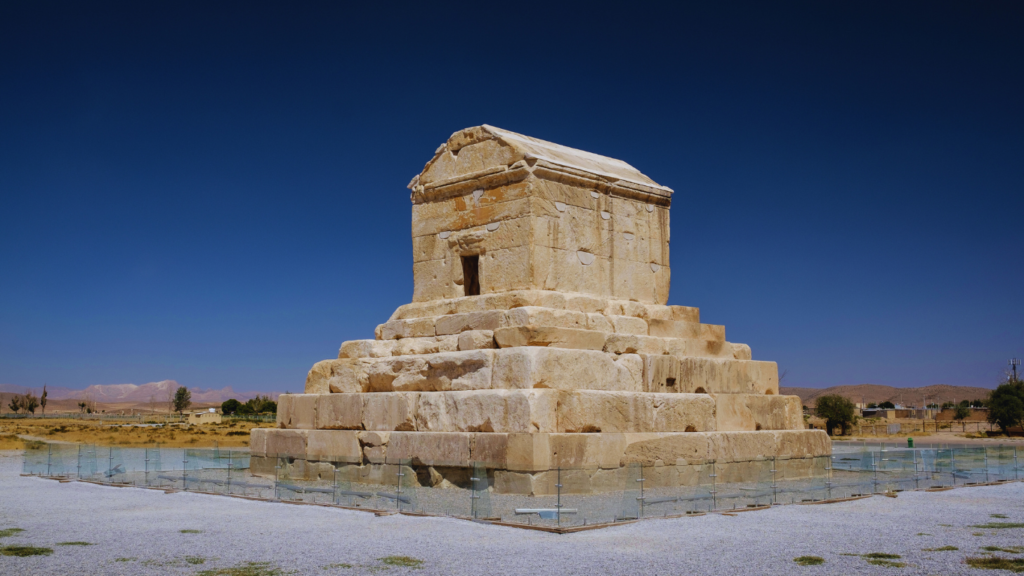
The legacy of Cyrus extends far beyond his time. His model of cultural tolerance influenced later empires, and his humanitarian principles found their way into modern human rights declarations. Alexander the Great, who conquered the Persian Empire two centuries later, made a pilgrimage to Cyrus’s tomb and ordered it restored—such was the respect commanded by this enlightened ruler even among his empire’s eventual conquerors.
Today, as we grapple with questions of cultural coexistence and effective governance, the example of Cyrus the Great remains surprisingly relevant. His demonstration that diversity can be a source of strength rather than weakness, and that respect for human dignity can go hand in hand with effective rule, offers valuable lessons for our own time.
References:
- Briant, P. (2002). From Cyrus to Alexander: A History of the Persian Empire. Eisenbrauns.
- Waters, M. (2004). Ancient Persia: A Concise History of the Achaemenid Empire. Cambridge University Press.
- Dandamaev, M.A. (1989). A Political History of the Achaemenid Empire. Brill Academic Publishers.